£5M+
Value impact linked to global AI capability strategy and execution.
initialising ai_transformation --mode=pragmatic
AI Transformation Leader | Fractional CTO/CAIO | Founder, Traversally
If your team is stuck between AI hype and real delivery, that is where I can help. Strategy without governance fails, so I work with leaders to shape clear direction, embed governance-as-code controls, and make AI adoption practical, safe, and valuable.
"Everyone now has an AI licence. The question is, what does that actually mean for organisations?"
Featured by Insider Media, Fast Tech 50 roundtable
Featured Talk
My Chartered Management Institute (CMI) session on using AI responsibly in recruitment and selection, keeping hiring decisions fair, transparent, and accountable.
A few moments from speaking, awards, and community leadership.
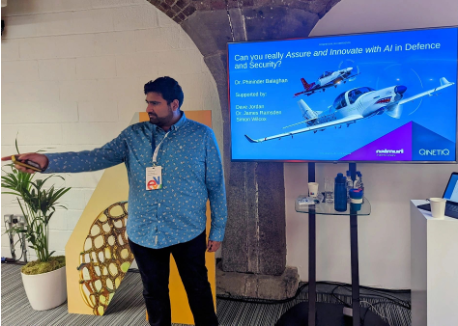
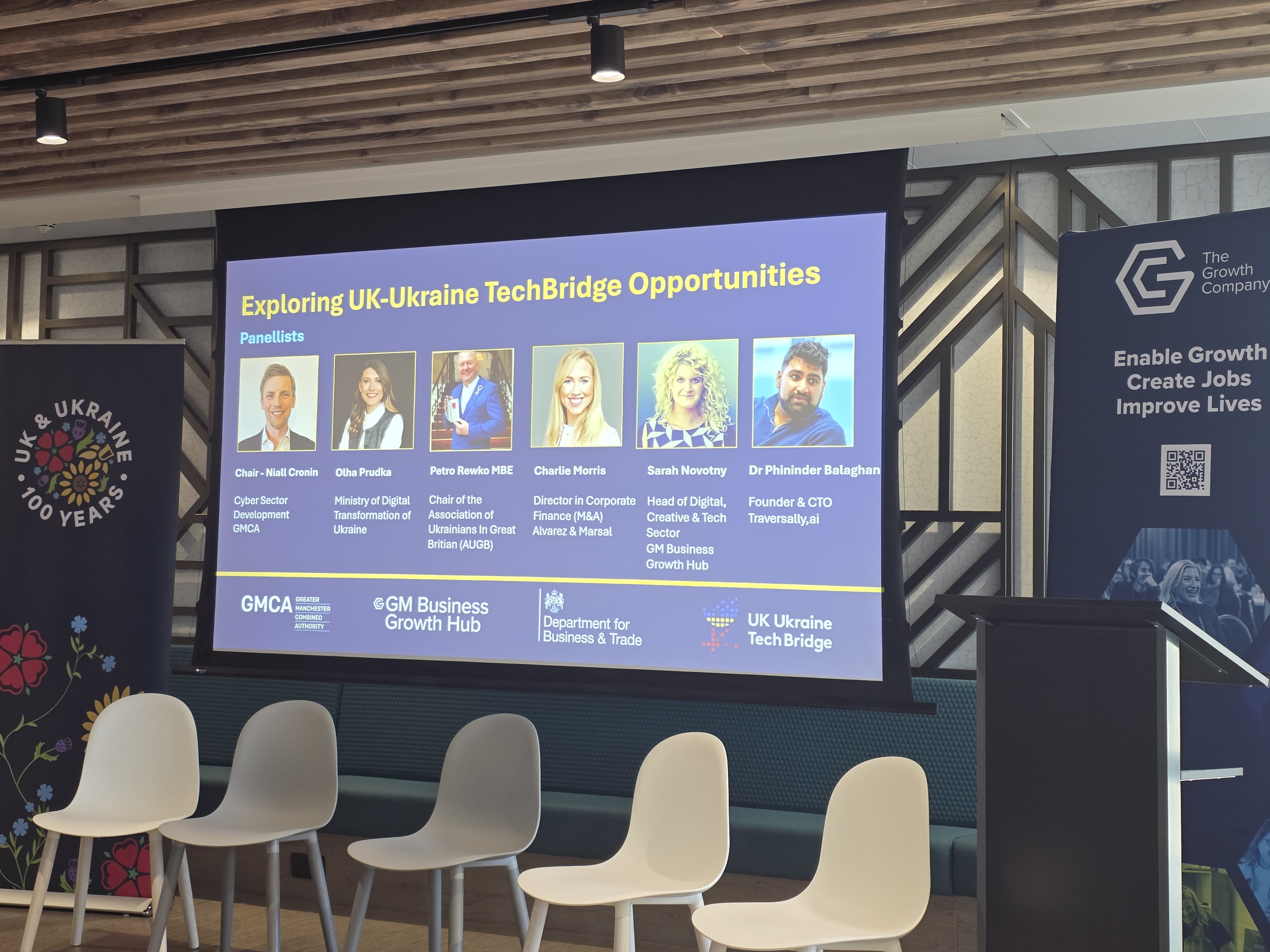
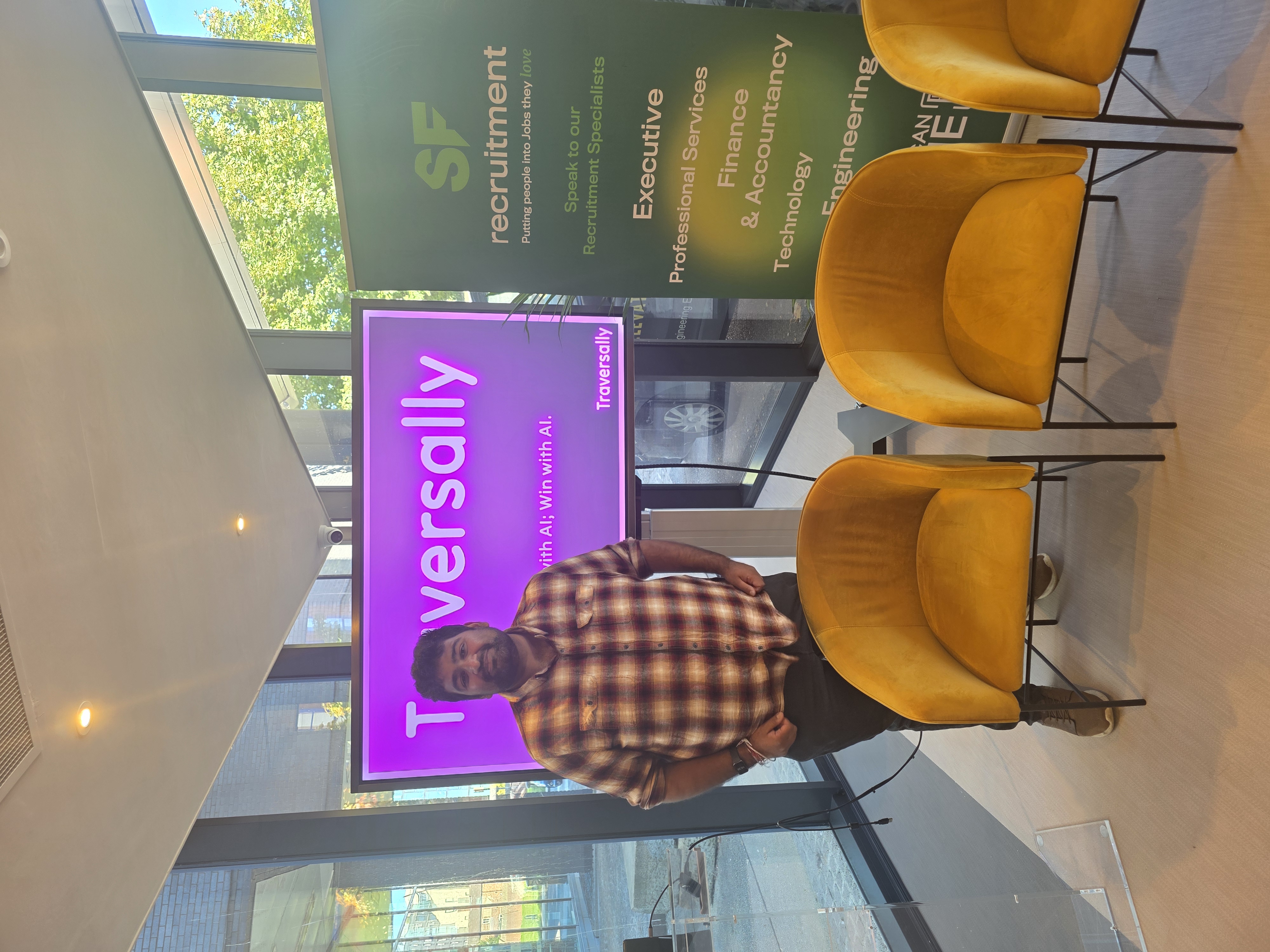
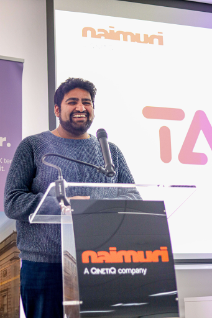
Visit the full gallery and webinar links on the Speaking and Community page.

I am an award-winning AI leader and University of Hull Alumni Laureate 2026, with experience across defence, consulting, innovation, and executive advisory. I have led global AI capability in a FTSE 250 environment, delivered strategic AI consulting, and now lead Traversally to help organisations become truly AI-ready.
My core focus is AI Governance as a Service: translating governance from a compliance checkbox into a competitive advantage by embedding policy into systems that can scale responsibly.
My style is simple: strategic clarity, technical depth, and plain-English communication. I focus on helping boards and leadership teams make confident decisions and then follow through with delivery.
My doctoral thesis, An exploration of graph algorithms and graph databases, is publicly hosted by the University of Hull repository.

Latest Recognition
Named a University of Hull Alumni Laureate, a distinction awarded to a small group of graduates recognised for exceptional achievement and impact within a decade of leaving the University, placing recent alumni alongside the University's most notable changemakers.
Value impact linked to global AI capability strategy and execution.
Pipeline growth generated through lead AI consulting engagements.
Consortium contract value, including £150k co-written University of Hull bid contribution.
People connected through TAG initiatives across 40+ organisations.
Challenge: Leadership teams had active pilots but no shared direction.
Approach: Built executive alignment, operating model, and a practical delivery roadmap.
Result: Clear prioritisation and measurable, board-visible execution path.
Challenge: Public, academic, and private stakeholders worked in silos.
Approach: Founded and scaled TAG to connect challenge owners with experts.
Result: 200+ participants across 40+ organisations and repeat collaboration on real government challenges.
Challenge: High-risk logistics needed autonomous support in difficult environments.
Approach: Co-invented BILS and supported demonstration-led validation.
Result: Programme traction across UK/US contexts and JTARR relevance.
I’m not interested in AI theatre. I focus on strategic clarity, responsible execution, and outcomes that stand up in front of a board. If something won’t work in the real world, we change it early.
"AI should stand for augmented intelligence because it's about augmenting the human."
Dr Phininder Balaghan, quoted in Digital Leaders AI Expert: Winning as a Digital Leader in the Age of Agentic AI
Practical frameworks and decision guidance from my recent talks and advisory work, including agentic AI, governance-as-code, AI operating models, and leadership execution patterns.
Explore the full hub on Thought Leadership.
A high-level view of the journey so far, from deep technical foundations to global AI leadership and executive advisory impact.
Graduated from the University of Hull with First-Class honours, establishing the technical base for later leadership in AI, data, and complex systems.
Completed doctoral research in graph algorithms and graph databases, delivering novel algorithmic contributions and publication-backed technical credibility.
Co-invented the Battlefield Integrated Logistics System (BILS) in the DSTL-backed autonomous resupply challenge, with high-profile UK/US demonstrations and downstream JTARR relevance.
Led innovation initiatives and founded TAG, creating a high-value bridge between technology, academia, and government communities.
Directed enterprise AI capability strategy, shaping roadmap, partnerships, and measurable value outcomes at scale.
Led strategic AI consulting engagements focused on practical adoption, platform delivery, and executive-level transformation outcomes.
As Founder and CTO, I help organisations cut through AI complexity and deliver confident transformation through strategy, capability, governance, and execution.
This website complements Traversally.ai and gives you a direct view of my leadership profile for partnerships, advisory work, and speaking.
Explore services in Services, speaking and community activity in Speaking, and a full public career timeline on LinkedIn.
Organisations typically bring me in when they are looking for one or more of the following:
I’m an AI transformation leader, Fractional CTO/CAIO, and Founder of Traversally. In practice, that means I help organisations get clear on what AI should actually do for them, then turn that into something usable.
Usually it starts with executive AI advice, a readiness check, and a roadmap that people can actually follow. From there, I help teams move from ideas and pilots into delivery.
The short version is: global AI capability leadership, principal consulting work, measurable value creation, public speaking and judging, recognition as a University of Hull Alumni Laureate 2026, and a PhD in Computational Science from the University of Hull.
This profile sits alongside Traversally and gives more context on my background, experience, and public work. If you want the services side, that lives on traversally.ai.
The Media section on the Speaking page has the highlights, and the latest timeline is on LinkedIn.
The easiest route is direct email at phininder.balaghan@traversally.ai or LinkedIn for a direct conversation. For organisation-level work, Traversally is the right place to start.
Teams that want board-level AI direction and someone who can stay close to implementation. I’m a good fit when people want practical progress, not just another strategy deck.
Most often it’s about getting the strategy aligned, sorting governance, shaping the operating model, and helping teams turn pilots into something that lasts.
Earlier on, I co-invented BILS in the DSTL-backed autonomous resupply challenge, helped with world-first demonstrations at AWE, and saw the system progress into JTARR. I also published research on complex graph problems.
Keep it simple: outcomes first, then use cases, then capability and governance. If the strategy is not linked to owners, budget, and delivery cadence, it is not a strategy yet.
First 30 days: align leadership and define priority outcomes. Next 30: assess readiness across people, data, platforms, and risk. Final 30: publish a roadmap with clear initiatives, owners, and success measures.
Most fail because they are either too technical for executives or too abstract for delivery teams. Common failure points are weak governance, no operating model, and pilots with no route to production.
Score each use case on business value, feasibility, risk, and speed to impact. Prioritise the options that are both meaningful and executable, not just technically interesting.
At minimum: accountable owners, model and data controls, risk and compliance checkpoints, and clear escalation paths. Governance should enable delivery, not just add process.
Track value in three buckets: commercial impact, operational performance, and risk reduction. Measure from baseline, review monthly, and stop initiatives that cannot show movement.
Design for production from day one: architecture, security, data quality, and adoption plan. Pilots should prove value and delivery viability, not just technical possibility.
Treat AI as a portfolio decision, not a single bet. Balance near-term value opportunities with clear risk controls, then review decisions with the same discipline used for other strategic investments.
You need leadership alignment, product and domain ownership, data foundations, platform capability, governance, and change support. Weakness in any one area slows the whole programme.
Bring one in when AI is strategically important but leadership capacity, clarity, or execution confidence is missing. It is often the fastest route to board-level direction and practical momentum.
Agentic AI is about systems that can plan and execute delegated tasks across tools and workflows. Leadership should focus first on intent, accountability, and guardrails rather than just tooling choices.
It means converting governance policy into executable controls that AI systems can follow at runtime. This keeps legal, risk, and operating rules consistent as systems scale and change.
Set explicit budget and execution limits, monitor orchestration chains in real time, and require escalation paths for edge cases. Cost control has to be designed into the architecture, not added later.
Default to augmentation for most high-value workflows and use replacement selectively where risk, quality, and institutional knowledge loss are understood. The aim is reliable value, not headline automation.